
How to Secure Tech T


SQUARETECH PERTH

How to Secure Tech Tools
Ensuring technology tools are secure is crucial for any business, including small businesses in Perth, Western Australia. Here are several steps they can take to enhance their technology security:
-
Perform Security Assessments: Begin by evaluating your current technology infrastructure to identify potential vulnerabilities and weaknesses. This can include network assessments, penetration testing, and vulnerability scanning. This assessment will help you understand where security improvements are needed.
-
Implement Strong Password Policies: Require employees to use complex passwords and update them regularly. Implement two-factor authentication (2FA) where possible to add an extra layer of security.
-
Regular Software Updates: Keep all software, including operating systems, applications, and plugins, up to date. Cybercriminals often exploit known vulnerabilities in outdated software.
-
Firewalls and Antivirus Software: Install and maintain firewalls and reputable antivirus software on all devices to prevent unauthorized access and malware infections.
-
Secure Wi-Fi Networks: Ensure your Wi-Fi network is encrypted and protected with strong passwords. Consider setting up a guest network for visitors to isolate them from your main business network.
-
Employee Training: Educate your employees about the importance of security practices, such as identifying phishing emails, avoiding suspicious websites, and not sharing sensitive information.
-
Data Encryption: Encrypt sensitive data, both in transit and at rest. This adds an extra layer of protection, especially if data is intercepted or stolen.
-
Regular Data Backups: Regularly back up your data and ensure backups are stored securely. This helps mitigate the impact of data loss due to cyberattacks or technical failures.
-
Access Control: Limit access to sensitive systems and data. Employees should only have access to the information necessary for their roles. Implement role-based access control (RBAC) to enforce this principle.
-
Mobile Device Security: If employees use mobile devices for work, enforce security measures such as device encryption, remote wipe capabilities, and mobile device management (MDM) solutions.
-
Incident Response Plan: Develop a plan for responding to security incidents. This plan should outline steps to take if a breach occurs, including communication protocols and recovery procedures.
-
Vendor Security: If you use third-party vendors for technology services, ensure they have strong security practices in place. Your business's security is only as strong as the weakest link in the chain.
-
Compliance with Regulations: Familiarize yourself with relevant data protection and privacy regulations, such as the General Data Protection Regulation (GDPR) and the Australian Privacy Principles (APPs). Ensure your technology practices align with these regulations.
-
Regular Audits and Monitoring: Conduct regular security audits and monitor network activity for unusual or suspicious behavior. This can help detect potential threats early on.
-
Insurance: Consider cyber insurance to help mitigate financial risks associated with security breaches.
-
Engage Security Professionals: Depending on your budget and needs, consider hiring external cybersecurity professionals to assess your security practices and provide recommendations.
Remember that security is an ongoing process, and threats are constantly evolving. By implementing these measures and staying vigilant, small businesses in Perth, Western Australia, can significantly enhance their technology security posture.
Post Categories
Featured Posts

Tue, 03-Oct-2023 03:52

Tue, 03-Oct-2023 05:46

Wed, 11-Oct-2023 04:08

Mon, 15-Sep-2025 11:57

Wed, 29-Oct-2025 16:34
Latest Posts
Wed, 05-Nov-2025 10:17
Wed, 29-Oct-2025 16:34
Thu, 09-Oct-2025 13:31
Thu, 09-Oct-2025 13:34

Fri, 19-Sep-2025 13:28
Mon, 15-Sep-2025 11:57

Tue, 09-Jul-2024 11:13

Wed, 29-May-2024 12:43
Latest Posts
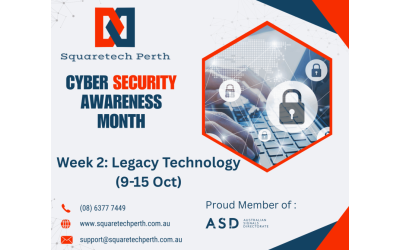
Legacy Technology: The Silent Risk in Your Business
Thu, 09-Oct-2025 13:31
Introduction If your business is still relying on old software or unsupported systems, you might be holding onto more risk than you realise. Legacy technology is one of the biggest blind spots for small and medium businesses — and cybercriminals ...
Read More
Protecting Digital Identities: The Frontline in Cybercrime Prevention
Wed, 29-May-2024 12:43
The latest National Scam Report states that in 2023, Australians will have lost AUD2.74 billion to scammers, with identity emerging as the new front line in cybersecurity. A total of AUD 1.3 billion was lost to investment scams, AUD 256 ...
Read More
Why Your Multi-Factor Authentication Might Not Be Enough
Tue, 09-Jul-2024 11:13
How Multi-Factor Authentication Can Still Be Compromised Outline: Multi-Factor Authentication (MFA) is a security mechanism that requires multiple forms of verification to prove a user's identity before granting access to a system, application, or account. The goal of MFA is ...
Read More
Unleashing the Dark Side of SAAS: Protect Your Business from SAAS Ransomware!
Thu, 02-Nov-2023 05:15
Software as a Service (SaaS) has dramatically revolutionized how firms work in today's digital world by delivering unparalleled flexibility and convenience of company operations. However, this convenience comes with a significant risk: SaaS ransomware. SaaS ransomware has emerged as one ...
Read More
Managed Services Benefit
Tue, 03-Oct-2023 03:49
1. Introduction to Managed Services for SMBs As small and medium-sized businesses (SMBs) strive to stay competitive in today's technology-driven landscape, efficient and reliable IT infrastructure is crucial. However, many SMBs face challenges in managing their IT operations effectively due ...
Read More
TOP 5 CYBERSECURITY MISTAKES
Tue, 03-Oct-2023 05:49
TOP 5 CYBERSECURITY MISTAKES AND HOW TO AVOID THEM Cybersecurity issues keeps getting worse for companies that rely on data to serve their clients and customers. According to the Identity Theft Resource Center, criminals committed 1,862 data breaches in 2021. ...
Read More